
Rollover Protection System (ROPS)
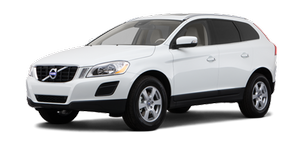
Volvo’s Rollover Protection System utilizes the Roll Stability Control (RSC) function, which is designed to help minimize the risk of a rollover in emergency maneuvers or if a skid should occur.
RSC uses a gyroscopic sensor that registers the amount of change in the lateral angle at which the vehicle is leaning. Using this information, RSC calculates the likelihood of a rollover.
If there is an imminent risk of a rollover, the Dynamic Stability and Traction Control system (DSTC) is activated, power to the engine is cut and the brakes are applied to one or more of the wheels until the vehicle regains stability.
For additional information on DSTC, see page 149.
WARNING
The vehicle’s stability systems, including
ROPS and RSC, do not replace the driver’s
responsibility for operating the vehicle in a
safe manner. Speed and driving style
should always be adapted to the current
road, traffic and weather conditions. Posted
speed limits should always be respected.
See also:
Removing the center console
In order to make it possible to move the center
seat in the second row of seats as far forward
as possible (seven-seat models only), the rear
section of the center console can be removed.
• Pu ...
Using voice commands
The driver initiates a voice command dialogue by pressing the voice control button
(see the illustration on page 240).
When a dialogue has been initiated, commonly used commands will be shown in th ...
Removing the cover to access the bulbs
NOTE
Before starting to replace a bulb, see
page 322.
1. Open the retaining clamps by pressing
them to the sides.
2. Pull the cover straight out.
Reinstall the cover in the reverse order. ...