
Changing coolant
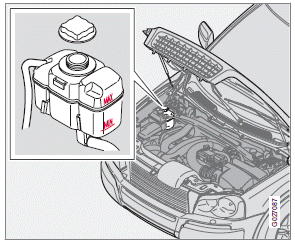
Coolant reservoir
Normally, the coolant does not need to be changed. If the system must be drained, consult a trained and qualified Volvo service technician.
CAUTION
• If necessary, top up the cooling system
with Volvo Genuine Coolant/Antifreeze
only (a 50/50 mix of water and antifreeze).
• Different types of antifreeze/coolant
may not be mixed.
• If the cooling system is drained, it
should be flushed with clean water or
premixed anti-freeze before it is refilled
with the correct mixture of water/antifreeze.
• The cooling system must always be
kept filled to the correct level, and the
level must be between the MIN and
MAX marks. If it is not kept filled, there
can be high local temperatures in the
engine which could result in damage.
Check coolant regularly!
• Do not top up with water only. This
reduces the rust-protective and antifreeze
qualities of the coolant and has a
lower boiling point. It can also cause
damage to the cooling system if it
should freeze.
• Do not use chlorinated tap water in the
vehicle's cooling system.
WARNING
• Never remove the expansion tank cap
while the engine is warm. Wait until the
vehicle cools.
• If it is necessary to top up the coolant
when the engine is warm, unscrew the
expansion tank cap slowly so that the
overpressure dissipates.
See also:
Other fluids and lubricants
...
Warning symbols on the battery
NOTE
A used battery should be disposed of in an environmentally responsible manner.
Consult your Volvo retailer or take the battery to a recycling station.
Handling
Check that the bat ...
Power brakes function only when the engine is running
The power brakes utilize vacuum pressure
which is only created when the engine is running.
Never let the vehicle roll to a stop with the
engine switched off.
If the power brakes are not working, ...