
Battery maintenance
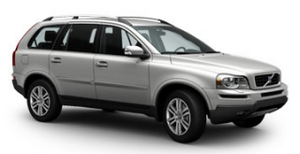
The battery in your vehicle is located under the floor of the cargo compartment.
Driving habits and conditions, climate, the number of starts, etc. all affect the service life and function of the battery. In order for your battery to perform satisfactorily, keep the following in mind:
• Use a screw driver to open the caps or
cover and a flashlight to inspect the level.
• If necessary, add distilled water. The level
should never be above the indicator.
• The fluid level should be checked if the
battery has been recharged.
• After inspection, be sure the cap over each
battery cell or the cover is securely in
place.
• Check that the battery cables are correctly
connected and properly tightened.
• Never disconnect the battery when the
engine is running, or when the key is in the
ignition. This could damage the vehicle's
electrical system.
• The battery should be disconnected from
the vehicle when a battery charger is used
directly on the battery.
• To help keep the battery in good condition,
the vehicle should be driven for at least 15
minutes a week or connected to a charger
with an automatic charging function.
• If the battery is fully discharged a number
of times, this may shorten its service life.
Keeping the battery fully charged helps prolong its service life.
• The service life of a battery is affected by factors such as driving conditions and climate.
Extreme cold may also further decrease the battery’s starting capacity.
• Because the battery’s starting capacity decreases with time, it may be necessary to recharge it if the vehicle is not driven for an extended period of time or if the vehicle is usually only driven short distances.
WARNING
PROPOSITION 65 WARNING!
Battery posts, terminals, and related accessories
contain lead and lead compounds,
chemicals known to the state of California
to cause cancer and reproductive harm.
Wash hands after handling.
WARNING
• Never expose the battery to open flame
or electric spark.
• Do not smoke near the battery.
• Battery fluid contains sulfuric acid. Do
not allow battery fluid to contact eyes,
skin, fabrics or painted surfaces. If contact
occurs, flush the affected area
immediately with water. Obtain medical
help immediately if eyes are affected.
NOTE
Used batteries should be properly disposed
of at a recycling station or similar facility, or
taken to your Volvo retailer.
See also:
Replacing the battery
1. Switch off the ignition.
2. Wait at least 5 minutes after switching
off the ignition before disconnecting the
battery so that all information in the vehicle's
electrical system can be stored ...
Common functions: Remote key/Personal Car Communicator (PCC)
Personal Car Communicator (PCC)
...
Selecting a magnetic zone
Magnetic zones.
The earth is divided into 15 magnetic zones. The correct zone must be selected
for the compass to work correctly.
1. Put the ignition in mode II.
2. Using a pen or similar objec ...