
Comfort and convenience
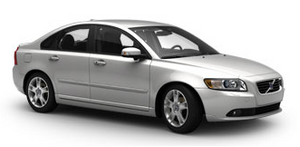
While the interior of the Volvo S40 places an emphasis on style, form has not been allowed to take precedence over function. The fascia ergonomics have been carefully designed and drivers will find that the controls are sensibly positioned and within easy reach. The driver's seat is multi-adjustable and the steering wheel adjusts for both rake and reach, ensuring that drivers of all shapes and sizes can get comfortable.
The development of the ultra-thin technology enabled Volvo's designers to introduce a useful storage area behind the central stack, which can be accessed from both front seats.
There is also plenty of room for passengers. The benefits and convenience of a four-door bodyshell in a class dominated by three or five-door alternatives should not be underestimated. At 1770mm wide (without wing mirrors) and 1454mm tall, with a wheelbase of 2640mm, the Volvo S40 offers excellent interior space. Five occupants can travel in comfort and all benefit from head restraints and a full three-point safety belt system. A rear seat belt reminder system automatically alerts the driver via a message on the instrument panel if any rear passengers are not wearing a seat belt.
With the rear seat in place, the boot capacity is 404 litres (325 litres in D5). Should the need arise, the luggage bay can also be extended. The rear seat splits into two sections and the backrest folds forwards to leave an entirely flat load floor. The Volvo S40 has a fold-flat front passenger seat, which allows loads up to 3.02m long to be carried.
See also:
Situations where ACC may not function optimally
WARNING
The radar sensor has a limited field of vision. In some situations it may
detect a vehicle later than expected or not detect other vehicles at all.
If ACC is not functioning prop ...
On and Off
In certain situations, it may be desirable to switch City Safety™ off, such as
when driving in close quarters where leaves, branches, etc. may obscure the hood
and windshield.
When the engine is ...
Dialing voicemail
The dialogue below enables you to call your
voicemail to check any messages that you may
have received. Your voicemail phone number
must be registered in the Bluetooth® function,
see page 236. ...