
Tire sealing system–overview

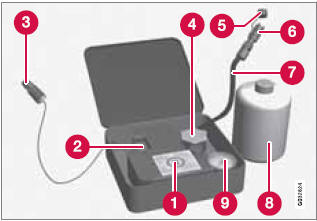
1 Speed limit sticker
2 On/Off switch
3 Electrical wire
4 Bottle holder (orange cover)
5 Protective hose cover
6 Air release knob
7 Hose
8 Bottle with sealing compound
9 Air pressure gauge
WARNING
Please keep the following points in mind
when using the tire sealing system:
• The sealing compound bottle (no. 8 in
the illustration) contains 1.2-Ethanol
and natural rubber-latex. These substances
are harmful if swallowed.
• The contents of this bottle may cause
allergic skin reactions or otherwise be
potentially harmful to the skin, the central
nervous system, and the eyes.
Precautions:
• Keep out of reach of children.
• Do not ingest the contents.
• Avoid prolonged or repeated contact
with the skin.
• Hands should be washed thoroughly
after handling.
First aid:
• Skin: Wash affected areas of skin with
soap and water. Get medical attention
if symptoms occur.
• Eyes: Flush with plenty of water for least
15 minutes, occasionally lifting the
upper and lower eyelids. Get medical
attention if symptoms occur.
• Inhalation: Move the person to fresh air. If irritation persists, get medical
attention.
NOTE
Do not break the seal on the bottle. This
occurs automatically when the bottle is
screwed into the holder.
See also:
Windshield wipers
1 Thumb wheel
2 Rain sensor on/off
Windshield wipers off
If the lever is in the 0 position
and
you move it upwards, the wipers
will sweep one stroke at a time for
as long as you hold the lev ...
Seat belt reminder
Seat belt reminder light in ceiling console
The seat belt reminder consists of an audible signal, an indicator light near
the rearview mirror and a symbol in the instrument panel that alert all o ...
Calling a contact
The dialogue below enables you to call the predefined contacts in your cell phone.
See the phone's user's guide if necessary.
The user initiates the dialogue by saying:
Phone > call con ...