
Roof loads
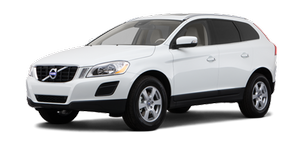
Using load carriers
Load carriers are available as Volvo accessories.
Observe the following points when in use:
• To avoid damaging your vehicle and to achieve maximum safety when driving, we recommend using the load carriers that Volvo has developed especially for your vehicle.
• Volvo-approved removable roof racks are designed to carry the maximum allowable roof load for this vehicle: 220 lbs (100 kg).
For non-Volvo roof racks, check the manufacturer's weight limits for the rack.
• Never exceed the rack manufacturer's weigh limits and never exceed the maximum rated roof load of 220 lbs (100 kg).
• Avoid single-point loads. Distribute loads evenly.
• Place heavier cargo at the bottom of the load.
• Secure the cargo correctly with appropriate tie-down equipment.
• Check periodically that the load carriers and load are properly secured.
• Remember that the vehicle's center of gravity and handling change when you carry a load on the roof.
• The vehicle's wind resistance and fuel consumption will increase with the size of the load.
• Drive smoothly. Avoid rapid starts, fast cornering and hard braking.
See also:
Keypads
Keypads in the steering wheel
1 - Cruise control, see page 153. Adaptive cruise control*, see page 155.
2 - Infotainment controls, see page 207. ...
Engaging the cruise control function
The cruise control panel is located on the left
side of the steering wheel hub.
NOTE
This does not set the vehicle's speed.
1. Press the CRUISE button.
> CRUISE will be displayed in the info ...
Exterior
The S60's lines make the car so much more modern and beautiful than the
average sedan. I especially love the look of the S60's rear end. The taillights
follow the lines of the trunk lid and keep t ...