
Environment
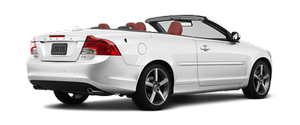
Volvo cares passionately about environmental protection, whether it's in reducing pollutants from its vehicles, or cutting pollutants entering the car. The well-being of people is at the core of every decision taken. Volvo's environmental dedication dates back to the 1970s and encompasses the car's entire lifecycle, from design, construction and production to use, servicing and recycling. The main focus is on efficient energy and resource utilisation, reduced emissions and non-allergenic car interiors.
The turbodiesel D5 engine has a combined fuel economy of 42.8 mpg (6.6 l/100 km). Even the top-range high-performance model, the T5, gives excellent economy considering its performance potential - 31.7 mpg (8.9 l/100 km) in manual form on the combined cycle. Naturally, all four engines meet latest emission regulations. The two petrol engines eliminate between 95-99 percent of harmful pollutants, while the diesel's particulate filter stops 95 percent of all soot particles from being emitted. The emission control system is designed to work as efficiently as possibly as soon as possible after start-up - when emissions are at their highest. Even the fuel cap has been carefully designed to prevent emissions: it is designed to allow minimum fuel evaporation both when driving and stationary.
When the roof is up, a cabin filter prevents dust and pollen entering the car through the ventilation system. The AQS (Air Quality System) further filters out unhealthy or unpleasant traffic pollutants and can close the ventilation intakes completely.
Upholsteries and all other interior components comply with the Oeko-Tex Standard 100 to reduce allergens. This includes the metal trim, which comply with the same standards for metal leakage as superior jewellery.
See also:
High beam, Halogen
1. Remove the headlight housing from the
vehicle (see page 322).
2. Remove the cover over the bulbs (see
page 323).
3. Remove the bulb by turning it counterclockwise
and pulling it straight ...
Lighting panel
Overview, light switches
1 - Thumb wheel for adjusting display and instrument lighting
2 - Rear fog light
3 - Headlights/parking lights
Instrument lighting
Illumination of the display and instr ...
Engine compartment
A - Engine compartment, upper
B - Engine compartment, front
C - Engine compartment, lower
Positions
These fuses are all located in C the engine compartment box. Fuses in are located
under A.
...