
Economical driving conserves natural resources
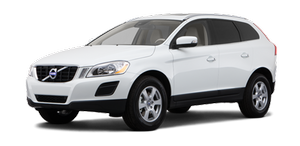
Better driving economy may be obtained by thinking ahead, avoiding rapid starts and stops and adjusting the speed of your vehicle to immediate traffic conditions.
Observe the following rules:
• Bring the engine to normal operating temperature as soon as possible by driving with a light foot on the accelerator pedal for the first few minutes of operation. A cold engine uses more fuel and is subject to increased wear.
• Whenever possible, avoid using the vehicle for driving short distances. This does not allow the engine to reach normal operating temperature.
• Drive carefully and avoid rapid acceleration and hard braking.
• Use the transmission's Drive (D) position as often as possible and avoid using kickdown.
• Using the transmission's Sport mode may increase fuel consumption somewhat. Use the transmission's Drive (D) position as often as possible. See page 117 for additional information about Sport mode.
• Do not exceed posted speed limits.
• Avoid carrying unnecessary items (extra load) in the vehicle.
• Maintain correct tire pressure. Check tire pressure regularly (when tires are cold).
• Remove snow tires when threat of snow or ice has ended.
• Note that roof racks, ski racks, etc, increase air resistance and also fuel consumption.
• At highway driving speeds, fuel consumption will be lower with the air conditioning on and the windows closed than with the air conditioning off and the windows open.
• Using the onboard trip computer's fuel consumption modes can help you learn how to drive more economically.
Other factors that decrease gas mileage are:
• Dirty air cleaner
• Dirty engine oil and clogged oil filter
• Dragging brakes
• Incorrect front end alignment
Some of the above mentioned items and others are checked at the standard maintenance intervals.
WARNING
Driving with the tailgate open: Driving with
the tailgate open could lead to poisonous
exhaust gases entering the passenger compartment.
If the tailgate must be kept open
for any reason, proceed as follows:
• Close the windows
• Set the ventilation system control to air
flow to floor, windshield and side windows
and the blower control to its highest
setting.
See also:
Safety
Safety is the key quality of any Volvo. Ever since the first Volvo was built
in 1927, the overriding priority has been to develop cars that help prevent
accidents and, if the accident does happen, ...
General information
Adjusting the seat belt
Seat belts should always be worn by all occupants of your vehicle. Children should
be properly restrained, using an infant, car, or booster seat determined by age,
weigh ...
Climate control maintenance
Special tools and equipment are required to
maintain and carry out repairs on the climate
system. Work of this type should only be done
by a trained and qualified Volvo service technician. ...